About 800 minutes
Children of the Mist — Key Ideas to Explore
Magic Oz Juvenile Fantasy
183,819 recorded words. 13 minutes difference from this book's estimate.
View Gutenberg source #14527
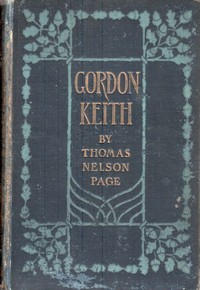
The catalog record for Gordon Keith — Edition Insights provides practical reading context through 180,884 words, 13 hr 7 min estimated reading time, and 19 detected text sections.
The text analysis averages about 13.4 words per sentence, while the detected sections provide another way to judge how the source is divided.
Project Gutenberg metadata also associates the work with “Young men -- Fiction,” connecting these edition facts with the source record’s subject description.
Explore this collection
These alternatives are selected using recorded categories and estimated reading time.
About 800 minutes
Magic Oz Juvenile Fantasy
183,819 recorded words. 13 minutes difference from this book's estimate.
View Gutenberg source #14527About 681 minutes
Magic Oz Juvenile Fantasy
156,439 recorded words. 106 minutes difference from this book's estimate.
View Gutenberg source #14571About 608 minutes
Magic Oz Juvenile Fantasy
139,821 recorded words. 179 minutes difference from this book's estimate.
View Gutenberg source #16382Search stored excerpts and compare books → Choose by your preferences →
Choices use stored catalog measurements. Estimates vary with reading speed. A shared category is a catalog label, not a claim that two books have the same argument or literary quality.
Search reads excerpt text stored with this catalog and links to its associated Gutenberg record. The connection is stored in the site database; this tool does not recheck that every excerpt is word-for-word identical to that external record. Excerpt search does not cover every chapter and does not verify historical publication dates.
Catalog snapshot checked: 2026-09-26. Coverage: 90 public books, 90 available source excerpts.
Calculated from edition completeness, EPUB availability, text structure and catalogue metadata. Not a user rating.
Total of 100 points, scaled to a 2.5-5.0 range. Editions with an empty description or a missing EPUB file are not scored.
Public-domain source text
The source text is kept in the dedicated reader, separate from this catalogue record and its commentary.
The opening chapter establishes Gordon Keith's patrimony as the intangible legacy of being "the son of a gentleman," a phrase Page repeats with the weight of a legal bequest. The narrator compares this inheritance to the cat left by the honest miller in the fairy tale—seemingly worthless but proving invaluable. General Keith, the father, is described as a relic, "an antique memorial" who knows only the Past and judges everything by the single standard of a gentleman. This framing immediately sets up the central tension: a code of honor inherited in a world that no longer understands it.
Page's word choices sharply delineate character. The narrator describes General Keith as "unmoved, unmarred" by war, using language of preservation and stasis. In contrast, the business scenes bristle with verbs of aggression: Wickersham "snarled," the foreman Matheson "rammed his clinched and hairy fist" under Wickersham's nose. The dialogue is equally revealing. Matheson declares himself "a law-abiding, God-fearing man" three times, a refrain that underscores his moral certainty. Wickersham's speech is peppered with curses and dismissals—"Go, and be d----d to you!"—marking him as a man who respects neither law nor God. The contrast is not merely between good and evil but between two distinct vocabularies: one rooted in an inherited code, the other in raw self-interest.
Page uses the concept of the "gentleman" as both a moral compass and a narrative constraint. Gordon Keith's father judges everything by this standard, and the narrator tells us that Keith himself carried this ideal "as a devoted Romanist wears a sacred scapulary next to the heart." The simile is deliberate: it suggests a religious devotion to a code that is increasingly obsolete. In the excerpted business conflict, Keith's reply to Wickersham is a model of restraint: "he did make the charge, and if Mr. Wickersham wished it, he was prepared to prove it." The conditional phrasing—"if Mr. Wickersham wished it"—leaves room for honor, while Wickersham's response is immediate bluster and threat. Page does not need to editorialize; the dialogue itself exposes the gulf between two ethical systems.
The excerpts offer only glimpses of setting, but those glimpses are charged with meaning. The Keith plantation, "Elphinstone," is described in the opening as a place where the father lived in the Past, "unchanged, unmoved" after war swept over the land. This is not mere nostalgia; it is a spatial representation of the father's moral fixity. In contrast, the business scenes take place in a mine office, where the physical proximity of the men—Wickersham rolling back in his chair, Matheson advancing slowly—creates a claustrophobic pressure. The mine itself is a contested space: the dispute over whether the coal lies "on the other side of the line" literalizes the boundary between honest work and dishonest gain. Page uses these settings to externalize internal conflicts, making the landscape a participant in the moral drama.
Page's narrator adopts a tone of measured authority, but the excerpts reveal subtle shifts in perspective. The opening paragraph uses the fairy-tale comparison with a knowing wink: "as in that case also, it stood to the possessor in the place of a good many other things." This is the voice of a storyteller who assumes a shared cultural reference. Later, when describing General Keith as "a type so old-fashioned that it is hardly accepted these days as having existed," the narrator acknowledges the reader's potential skepticism while insisting on the character's reality. In the business scenes, the narrator withdraws almost entirely, letting dialogue carry the conflict. The effect is a narrative that oscillates between intimate commentary and detached observation, forcing the reader to judge the characters by their words and actions rather than by authorial pronouncements.
Readers should attend to how Page uses repetition—of phrases, of moral categories, of physical gestures—to build character and conflict. The novel's length (over 180,000 words) allows for a gradual unfolding of these patterns. The excerpts suggest that Page is less interested in plot twists than in the slow erosion and reaffirmation of a code of honor. Pay attention to who speaks in complete sentences and who stammers, who uses abstractions and who uses threats. These linguistic choices are the novel's primary engine.
I keep thinking about how Gordon Keith carries his father's code into a world that's already forgotten it. That ache between what we're handed and what we survive—it stayed with me. I stumbled on Once Upon A Time — Edition Insights the other night, and for a moment it felt like the same quiet ache, just wearing a different coat. Some stories don't leave; they wait.
Answer a few questions and save a private reflection on this device.