About 218 minutes
Bracebridge Hall — Key Ideas to Explore
Historical Social Novels
50,009 recorded words. 7 minutes difference from this book's estimate.
View Gutenberg source #14228
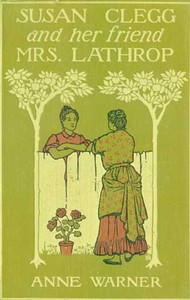
The catalog record for Susan Clegg and Her Friend Mrs. Lathrop — Reading Companion provides practical reading context through 51,636 words, 3 hr 45 min estimated reading time, and 5 detected text sections.
The text analysis averages about 20.3 words per sentence, while the detected sections provide another way to judge how the source is divided.
Project Gutenberg metadata also associates the work with “Humorous stories,” connecting these edition facts with the source record’s subject description.
Explore this collection
These alternatives are selected using recorded categories and estimated reading time.
About 218 minutes
Historical Social Novels
50,009 recorded words. 7 minutes difference from this book's estimate.
View Gutenberg source #14228About 216 minutes
Historical Social Novels
49,581 recorded words. 9 minutes difference from this book's estimate.
View Gutenberg source #14755About 238 minutes
Historical Social Novels
54,603 recorded words. 13 minutes difference from this book's estimate.
View Gutenberg source #14682Search stored excerpts and compare books → Choose by your preferences →
Choices use stored catalog measurements. Estimates vary with reading speed. A shared category is a catalog label, not a claim that two books have the same argument or literary quality.
Search reads excerpt text stored with this catalog and links to its associated Gutenberg record. The connection is stored in the site database; this tool does not recheck that every excerpt is word-for-word identical to that external record. Excerpt search does not cover every chapter and does not verify historical publication dates.
Catalog snapshot checked: 2026-09-26. Coverage: 90 public books, 90 available source excerpts.
Calculated from edition completeness, EPUB availability, text structure and catalogue metadata. Not a user rating.
Total of 100 points, scaled to a 2.5-5.0 range. Editions with an empty description or a missing EPUB file are not scored.
Public-domain source text
The source text is kept in the dedicated reader, separate from this catalogue record and its commentary.
Anne Warner builds Susan Clegg and Her Friend Mrs. Lathrop almost entirely around the fence-side conversations of two neighbors. The narrative voice is brisk and colloquial, often letting Susan’s unbroken monologues carry the action. In the opening chapter, the author establishes a key structural device: Mrs. Lathrop chews clover blossoms while listening, a small physical detail that recurs as a marker of her passive role. Warner’s dialogue is dense with local idiom and precise domestic references—teacups, parasols, plasters, and mill-wheels—that ground the humor in tangible objects and routines.
Warner rarely uses third-person summary for long; instead, she lets Susan Clegg speak in extended, unbroken stretches. In The Marrying of Susan Clegg, Susan delivers a multi-paragraph assessment of a cow’s rampage, ticking off damages: “nine teacups o’ Gran’ma Mullins’,” parasol punches, and the sudden career boost for young Dr. Brown. The effect is a cascade of cause and effect, all delivered in a single breath. Mrs. Lathrop’s responses are minimal—often just physical reactions, like her leg suddenly going numb under a plaster. This asymmetry creates comedy: Susan’s verbal energy overwhelms her friend’s placid nature, and the reader watches Mrs. Lathrop struggle to keep up.
Warner’s humor often springs from the aftermath of a single object—a cow, a plaster, a missing son. In Lathrop’s Cow, the cow’s destruction is recounted not as a scene but as a list of consequences: lawsuits, medical bills, and community gossip. The plaster on Mrs. Lathrop’s leg becomes a running gag, with Susan proposing an axe or boiling water to remove it. Warner lingers on the physicality of these items: the cow is “hung up dead,” the plaster “grating and powdering.” This focus on tangible trouble keeps the comedy grounded, never abstract.
The characters’ speech is marked by contractions, dropped consonants, and rhythmic repetition. Susan says, “Folks ’s ain’t got nothin’ don’t never have any law troubles,” a double negative that feels natural, not forced. Warner also uses parallel structure for comic effect: “you jus’ up ’n’ tell him … you jus’ out ’n’ ask him.” The dialogue is peppered with local references—Mr. Weskin, old Dr. Carter, the man who mends church spires—that create a dense social map. Mrs. Lathrop’s voice is quieter, often reduced to exclamations like “I can’t feel my leg!” or “not the axe.” This contrast in volume and velocity defines their relationship.
Warner often skips the event itself and reports only its retelling. In Susan Clegg’s Cousin Marion, a rainy day prompts Mrs. Lathrop to wonder where Susan is going—but the narrative stays with Mrs. Lathrop’s mild curiosity, not the errand. The cow’s rampage is never shown; it exists only in Susan’s post-hoc inventory. This technique forces the reader to piece together action from dialogue, making the conversations feel urgent and packed. Warner also uses the fence as a fixed stage: the women meet there “early and late,” and the setting barely changes, which heightens the importance of what is said.
Susan Clegg’s monologues reveal her as shrewd, bossy, and endlessly practical. She advises Mrs. Lathrop to counter a lawsuit by threatening to sue the lawyer for “throwin’ you head foremost into a fever.” Her logic is circular but effective: “There’s always a way out o’ anythin’ ’f a person only don’t try to think it out.” Mrs. Lathrop, by contrast, is reactive and physically expressive—she “bunched herself” and “elongated and contracted herself, caterpillar-like.” Warner uses these small bodily descriptions to differentiate the two women without ever stating their personalities outright.
Readers will find that the pleasure of this novel lies not in plot but in the texture of its talk. Warner’s ear for rural American speech and her willingness to let a single conversation carry an entire chapter make this a distinctive example of early twentieth-century humor. Pay attention to what is not described—the cow, the minister’s vacation—and how the gaps become part of the joke.
Sometimes I think Susan Clegg’s voice—so certain, so relentless—is what we miss most in our quieter hours. There’s a comfort in that old certainty, even when it’s wrong. I found a different kind of listening in Children of the Market Place — Text and Context, a slower ache, but the same longing to be understood. Both books stay with me like familiar porch shadows.
Answer a few questions and save a private reflection on this device.