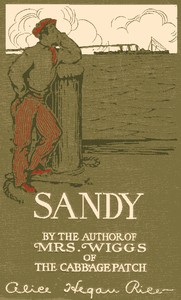
About 218 minutes
Sandy — Key Ideas to Explore
Exploration Survival Adventure Tales
49,932 recorded words. 25 minutes difference from this book's estimate.
View Gutenberg source #14079

The catalog record for The Lonesome Trail and Other Stories — Background and Themes provides practical reading context through 55,850 words, 4 hr 3 min estimated reading time, and 5 detected text sections.
The text analysis averages about 17.0 words per sentence, while the detected sections provide another way to judge how the source is divided.
Project Gutenberg metadata also associates the work with “Fiction,” connecting these edition facts with the source record’s subject description.
Explore this collection
These alternatives are selected using recorded categories and estimated reading time.
About 218 minutes
Exploration Survival Adventure Tales
49,932 recorded words. 25 minutes difference from this book's estimate.
View Gutenberg source #14079About 287 minutes
Exploration Survival Adventure Tales
65,840 recorded words. 44 minutes difference from this book's estimate.
View Gutenberg source #14356About 188 minutes
Exploration Survival Adventure Tales
43,060 recorded words. 55 minutes difference from this book's estimate.
View Gutenberg source #16869Search stored excerpts and compare books → Choose by your preferences →
Choices use stored catalog measurements. Estimates vary with reading speed. A shared category is a catalog label, not a claim that two books have the same argument or literary quality.
Search reads excerpt text stored with this catalog and links to its associated Gutenberg record. The connection is stored in the site database; this tool does not recheck that every excerpt is word-for-word identical to that external record. Excerpt search does not cover every chapter and does not verify historical publication dates.
Catalog snapshot checked: 2026-09-26. Coverage: 90 public books, 90 available source excerpts.
Calculated from edition completeness, EPUB availability, text structure and catalogue metadata. Not a user rating.
Total of 100 points, scaled to a 2.5-5.0 range. Editions with an empty description or a missing EPUB file are not scored.
Public-domain source text
The source text is kept in the dedicated reader, separate from this catalogue record and its commentary.
The opening of 'The Lonesome Trail' announces its method with a simile: 'A man is very much like a horse.' This comparison sets the tone for a collection where character is revealed through action and speech rather than introspection. Bower's narrator adopts a knowing, slightly wry tone, as when describing Weary Davidson's youthful infatuation: 'She might have lived there a century and Weary been none the worse, had he not acquired the unfortunate habit of growing up.' The prose is dense with specific, concrete details—pink bare soles, a base-ball nine with seven players, a girl squeezing into too-small shoes—that ground the story in a particular time and place.
Bower renders speech with careful attention to dialect, giving each character a distinct verbal fingerprint. Old Dock's French-accented English—'Mon Dieu, I feex yous plandy'—contrasts sharply with Weary's colloquial Western cadence: 'Sober, by thunder!' The cook Happy Jack delivers dry understatement: 'When I git sick, I'll send you for help—if I want to die.' These voices do not merely decorate; they carry plot information and emotional weight. Dock's complaint about the rope ('she not comforte') reveals his discomfort and pride, while Weary's reply ('I was plumb obliged to tie yuh on') shows both his urgency and his familiarity with the old man. The dialogue advances the rescue mission while building a sense of shared history.
The opening simile—comparing a frightened man to a shying horse—is not a one-off flourish. Throughout the excerpt, horses are extensions of their riders' states. Weary's horse Glory stumbles and hobbles, mirroring his own desperation: 'When he picked himself up he hobbled and Weary cursed him unpityingly.' The pinto horse that Dock rides is described as bucking, kicking, and running—'she lak for keel me also'—echoing the unruly emotions Weary tries to control. Bower uses the animals to externalize internal conflict, a technique that keeps the narrative grounded in the physical world of the range.
Bower builds setting with swift, sensory strokes. Night is marked by 'the slant of the Great Dipper'; dawn arrives with 'the first beams of the sun touching redly the hilltops' and 'birds singing from swaying weeds.' The camp of the Flying-U is evoked through a single detail: 'Happy Jack, with the cook's apron tied tightly around his lank middle, stood despondently in the doorway.' Action scenes are similarly compressed. When Weary rides toward the sound of a nickering horse, the sequence is told in one long sentence that builds tension: 'Wheeling sharply, his spurs raking the roughened sides of Glory, he rode recklessly toward the sound, not daring to hope...' The prose moves as fast as the rider.
Bower leavens high-stakes moments with dry humor. When Weary and Dock arrive expecting to find Patsy dead, Happy Jack's delayed punchline—'Well, no, he ain't dead yet—but it's no thanks to you. Was it poker, or billiards? and who won?'—deflates the tension while reinforcing the camaraderie of the camp. Earlier, Weary's curse of Glory ('cursed him unpityingly') is immediately undercut by his own limp arrival. This tonal control prevents melodrama. Even the life-or-death race for medicine is punctuated by Dock's ironic 'I not do de mageec.' The narrator trusts the reader to catch the gap between what characters say and what they feel.
Readers coming to this collection should attend to the interplay between Bower's omniscient narrator and her characters' vernacular. The stories reward attention to small gestures—a dropped rein, a delayed reply—that carry emotional weight. The excerpts suggest a world where competence and loyalty are tested through physical ordeal, but where the real drama lies in how men speak to one another when the stakes are highest.
Years ago, I shelved B. M. Bower’s Lonesome Trail and felt that odd ache in a cowboy’s drawn-out loneliness. There’s a kindred quiet in A Voyage of Consolation (being in the nature of a sequel to the experiences of 'An American girl in London') — Key Ideas to Explore, though its distances are parlors, not prairies. Both understand how a heart treads water, waiting for a familiar shore.
A brief reflection can help important ideas stay with you longer.