About 316 minutes
The Wedge of Gold — Themes and Context
Technology Airships Imagined Futures
72,466 recorded words. 22 minutes difference from this book's estimate.
View Gutenberg source #16861
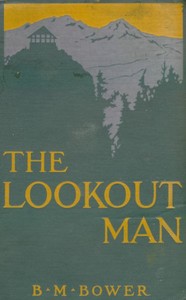
The Lookout Man — Inside the Classic can be approached with a clearer sense of reading commitment from its source measurements: 77,732 words, 5 hr 38 min estimated reading time, and 8 detected text sections.
The text analysis averages about 18.0 words per sentence, while the detected sections provide another way to judge how the source is divided.
Project Gutenberg metadata also associates the work with “Western stories,” connecting these edition facts with the source record’s subject description.
Explore this collection
These alternatives are selected using recorded categories and estimated reading time.
About 316 minutes
Technology Airships Imagined Futures
72,466 recorded words. 22 minutes difference from this book's estimate.
View Gutenberg source #16861About 284 minutes
Technology Airships Imagined Futures
65,141 recorded words. 54 minutes difference from this book's estimate.
View Gutenberg source #14556About 396 minutes
Technology Airships Imagined Futures
90,971 recorded words. 58 minutes difference from this book's estimate.
View Gutenberg source #14654Search stored excerpts and compare books → Choose by your preferences →
Choices use stored catalog measurements. Estimates vary with reading speed. A shared category is a catalog label, not a claim that two books have the same argument or literary quality.
Search reads excerpt text stored with this catalog and links to its associated Gutenberg record. The connection is stored in the site database; this tool does not recheck that every excerpt is word-for-word identical to that external record. Excerpt search does not cover every chapter and does not verify historical publication dates.
Catalog snapshot checked: 2026-09-26. Coverage: 90 public books, 90 available source excerpts.
Calculated from edition completeness, EPUB availability, text structure and catalogue metadata. Not a user rating.
Total of 100 points, scaled to a 2.5-5.0 range. Editions with an empty description or a missing EPUB file are not scored.
Public-domain source text
The source text is kept in the dedicated reader, separate from this catalogue record and its commentary.
The Lookout Man opens with a long, rhythmic sentence that pulls the reader from the distant surf to the narrowing beach at Venice, California, where the tide and wind drive bathers away. B. M. Bower establishes a keen eye for atmosphere and social detail—the “garishly costumed bathers,” the “shoddy buildings” of summer sojourners, and the clanging gongs of city-bound streetcars. This is not a simple western; it begins in a crowded, transient seaside resort, far from the forested mountains that will become the story’s center.
The narrative voice shifts markedly once the action moves to the Feather River country. The prose becomes leaner, more focused on physical tasks—building a heliograph, scouting for caves, watching for fire. Bower uses these changes in pace to mirror the protagonist’s own transition from a hunted man to a guardian of the forest, though the excerpts leave the full arc of that change unclear.
The opening chapter dwells on the ebb and flow of a Sunday night at Venice Beach, with long, descriptive sentences that mimic the rhythm of the tide: “the surf came booming in with the heavy impetus of high tide, flinging long streamers of kelp.” The prose is unhurried, almost cinematic, as it tracks the retreat of bathers and the lingering of revelers in cafes. This leisurely pace contrasts sharply with later passages set in the forest, where sentences grow shorter and more urgent. When Jack Corey prepares to leave his post during a fire, the narrative accelerates: “He could make all preparations for leaving—but until the fire was out and the forest safe for the time being, he could not go.” The shift in rhythm underscores the change from a world of cheap pleasures to one of real danger and responsibility.
Bower differentiates characters through their speech patterns. Jack’s interior monologue is headlong and impulsive: “He was a headlong youth, much given to hasty judgments.” Marion Rose, by contrast, speaks in exclamatory, theatrical bursts. She calls Jack’s situation “a story in real life” and declares, “I’ve always wished I could be an outlaw—if I could be one without doing anything really bad, you know.” Her dialogue is peppered with words like “keen” and “awfully interesting,” and she proposes a code of conduct: “for once I want to see if a boy and a girl can’t cut out the love interest and be just good pals.” This playful, self-aware voice stands in tension with the grim reality of forest fires and police searches. The excerpts do not reveal whether this tension resolves, but the contrast in tone is a deliberate structural choice.
Two objects anchor the narrative’s middle sections: the heliograph and the cave. Marion and Jack devise a “heliograph code” to signal across the mountain, a detail that blends frontier resourcefulness with the era’s fascination with technology. The cave they seek is imagined as a “picturesque hide-out” with a “tilting rock to cover the doorway.” These recurring motifs—signaling, hiding, watching—reinforce the theme of surveillance and secrecy. Fire, too, recurs as both a literal threat and a moral test. Jack cannot abandon his post while “his beloved mountain was being scarred with fire,” and his loyalty to the forest outweighs his personal fears. The excerpts do not show the fire’s outcome, but the repeated emphasis on these elements suggests they are central to the plot’s development.
Readers should attend to how Bower modulates pace between the crowded, noisy opening and the isolated, quiet mountain scenes. The dialogue between Jack and Marion offers a rare, explicit negotiation of gender roles in early twentieth-century popular fiction—Marion’s insistence on “no love interest” is worth noting. Because the excerpts are incomplete, the ultimate fate of the heliograph code, the cave, and the fire remains unknown, but the groundwork is laid for a story that balances adventure with a self-conscious playfulness.
There’s a loneliness in that lookout tower I kept thinking about—a man hidden away, watching fires he can’t fully control. It reminded me of another old story, Guy Rivers: A Tale of Georgia — Reading Companion, where the wilderness also holds secrets. Both feel less like adventures and more like quiet, lingering weather.
Save your reaction, strongest insight, and memorable passage.